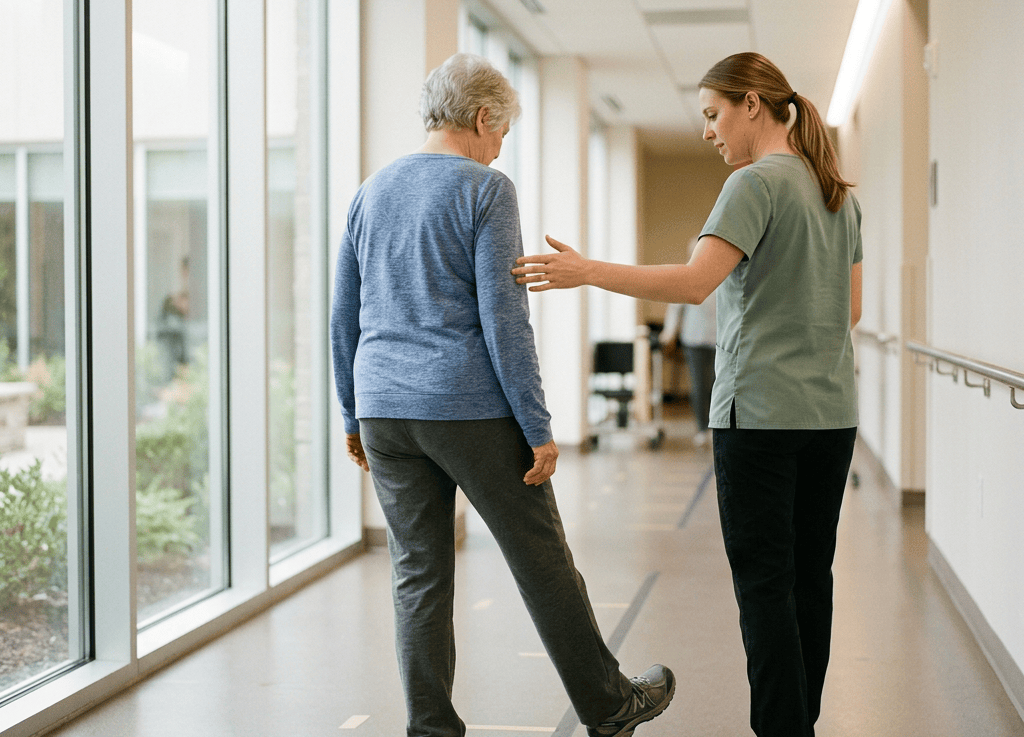
If you’ve been diagnosed with Parkinson’s disease, you’ve probably noticed that walking isn’t as effortless as it once was. Perhaps your steps have become smaller, turning around feels awkward, or you’ve experienced moments where your feet seem “stuck” to the floor. These changes can be worrying—not just physically, but emotionally too. Parkinson’s disease affects everyone differently. However, there is something incredibly encouraging that recent research continues to show: exercise is one of the most powerful tools we have to improve walking, balance, and confidence. While exercise cannot cure Parkinson’s disease, it can significantly improve how you move, reduce your risk of falls, and help you stay independent for longer. More importantly, it’s never too late to start.
Why Does Parkinson’s Affect Walking?
Walking is something most of us never think about—until it becomes difficult.Normally, the brain controls walking automatically. Parkinson’s disease affects the parts of the brain responsible for initiating and coordinating movement. As a result, everyday walking can become slower and less efficient. You may notice:
- Shuffling or taking smaller steps
- Reduced arm swing
- Difficulty starting to walk
- Freezing of gait (FOG)
- Trouble turning
- Poor balance
- Increased fear of falling
Unfortunately, many people respond by moving less because they’re worried about falling. Although this is completely understandable, reducing activity often creates a cycle where muscles become weaker, balance declines, and confidence decreases.The encouraging news is that our brains remain capable of adapting. This ability, known as neuroplasticity, allows the brain to build new movement pathways through repeated practice. That’s exactly why physical therapy and regular exercise are so important.
What Does the Latest Research Tell Us?
Over the past five years, research into physical therapy for Parkinson’s disease has advanced considerably. Rather than focusing only on strengthening muscles, rehabilitation now also challenges the brain while the body is moving.
Yang et al. (2023) found that dual-task gait training significantly improved walking speed, balance, motor symptoms, and daily function in people with Parkinson’s disease.
What Is Dual-Task Training?
Dual-task training simply means walking while performing another task at the same time. Examples include:
- Counting backwards
- Naming animals
- Carrying a light shopping bag
- Talking while walking
This reflects everyday life because we rarely walk without thinking, talking, or carrying something. Similarly, a 2024 umbrella review found that gait training, balance exercises, aerobic exercise, and strength training all improve mobility and quality of life. Rather than searching for one “perfect” exercise, combining different types of movement appears to provide the greatest benefit.
Why Balance Training Matters
Balance problems are one of the biggest reasons people living with Parkinson’s lose confidence. Many people worry about tripping or falling and begin avoiding shopping centres, uneven footpaths, or social outings. Fortunately, balance can be trained.
Recent studies show that exercises which safely challenge balance can improve postural control, reduce falls, and increase confidence during everyday activities. Like any skill, balance improves with regular practice.
5 Simple Exercises to Improve Walking and Balance
Safety Tip: Always exercise in a safe environment. Stand near a sturdy kitchen bench, countertop, or chair if you need support. Consult your physical therapist before starting a new exercise programme.
1. Walk with Bigger Steps
One of the hallmark features of Parkinson’s disease is gradually taking smaller steps without realising it. Practice walking with good posture:
- Stand tall.
- Look ahead rather than at your feet.
- Take deliberately bigger steps.
- Swing both arms naturally.
- Continue for 5–10 minutes.
2. Sit-to-Stand Practice
Standing up from a chair is one of the best functional exercises for improving strength and balance.
- Sit on a sturdy chair.
- Bring your feet underneath you.
- Lean your nose over your toes.
- Push through your legs.
- Stand up fully.
- Slowly lower yourself back down.
Aim for 10 repetitions.
3. Weight Shifting
Weight shifting improves balance and confidence while walking.
- Stand with your feet shoulder-width apart.
- Slowly shift your weight onto one leg.
- Hold for 5 seconds.
- Return to the middle.
- Repeat on the opposite side.
Practice for 2–3 minutes.
4. Heel-to-Toe Walking
This exercise improves dynamic balance.
Before walking, try holding the heel-to-toe position for 5–10 seconds while standing near a stable support. Then:
- Walk slowly.
- Keep your eyes looking forward.
- Hold onto a countertop if needed.
- Start with 5 steps and gradually increase.
5. Challenge Your Brain While You Walk
One of the most exciting advances in Parkinson’s rehabilitation is dual-task training.Once you’re comfortable walking safely, add a thinking task.
- Counting backwards from 100 by threes
- Naming fruits from A to Z
- Reciting the months of the year backwards
- Carrying a light object while walking
According to Yang et al. (2023), this type of training improves walking in real-life situations.
Practical Tips for Freezing of Gait (FOG)
Freezing of gait can be one of the most frustrating symptoms of Parkinson’s disease. If your feet feel “glued” to the floor:
- Stop for a moment.
- Take a slow breath.
- Shift your weight from one foot to the other.
- Step over an imaginary line.
- Count, “1, 2, 3, step.”
- Use a rhythmic beat or metronome if it helps.
- These cueing strategies are supported by growing research and are commonly incorporated into physical therapy programmes.
Consistency Beats Intensity
The best exercise programme is the one you can continue doing every week. Walking for 20–30 minutes most days, practising your balance exercises, and staying physically active will have a much greater impact than exercising intensely once every few weeks. Even 10–15 minutes of movement is better than none. Every step you take is another opportunity for your brain to practise movement and build confidence. Whether it’s taking bigger steps around your home, standing up from your chair a few extra times, or going for a short walk around the block, every movement matters.
When Should You See a Physical Therapist?
Getting evaluated by a physical therapist is the first step toward finding the right exercise programme for you. A comprehensive assessment helps identify your current strength, balance, walking ability, and overall functional capacity. Based on this assessment, a personalised exercise programme can be developed to match your individual goals while ensuring that every exercise is both safe and effective.

