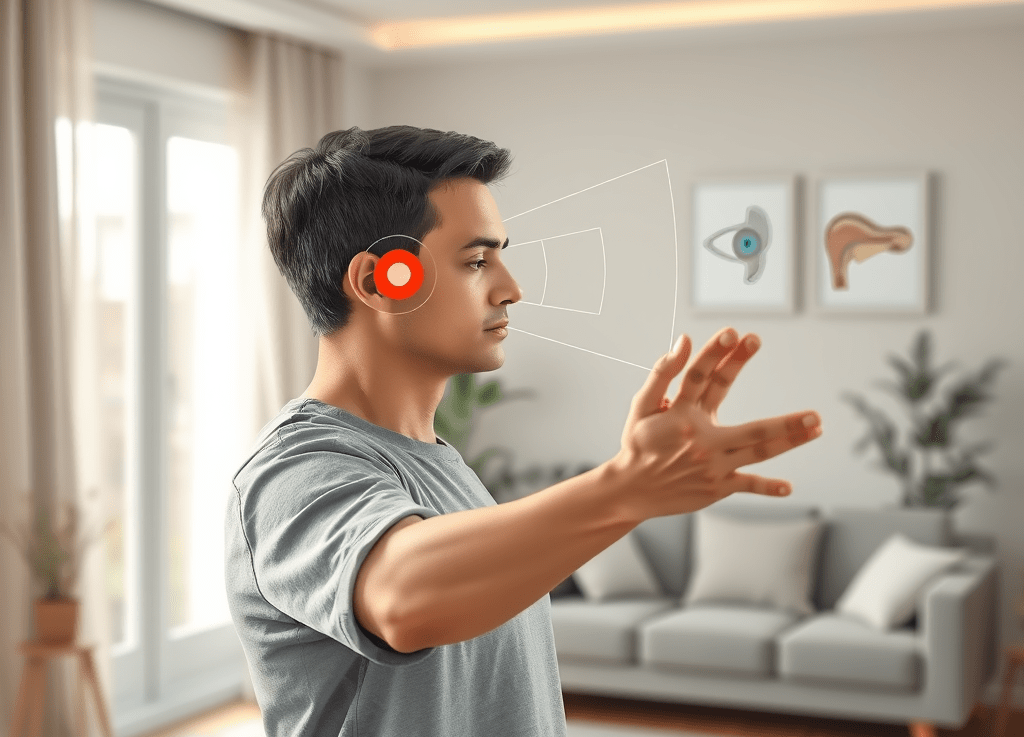
Have you ever stood up too fast and felt a wave of dizziness? Have you turned your head quickly or tried to walk in a busy store and experienced the same? One set of gentle exercises used by physical therapists to help improve balance and reduce dizziness is called VOR exercises. If you’ve never heard of them, don’t worry. This post will explain what they are. It will also tell you why they help and how they’re used safely.
What Does “VOR” Mean?
VOR stands for Vestibulo-Ocular Reflex. It refers to how your inner ear and your eyes work together. They keep your vision steady while your head moves. It’s why you can read a street sign while walking or spot a friend in a moving crowd. When this reflex weakens, you feel dizzy, off-balance, or like the world blurs when you turn your head.
Three Exercises: VOR 1, VOR 2, and VOR-C
Think of these as three different ways to challenge your balance and vision system. They’re simple but powerful when done regularly.
VOR 1 – Head Moves, Eyes Stay on Target
Hold a target in front of you. A sticky note on the wall works fine. Your thumb at arm’s length is also a good option. Keep your eyes glued to it while gently moving your head side to side or up and down.
- Builds steadiness when turning your head
- Great starting point for most people
Benefit: Reduces dizziness when turning your head and improves gaze stability.
VOR 2 – Head and Target Move Opposite Ways
Same setup, but this time when your head goes right, your target moves left — and vice versa.
- Harder than VOR 1
- Improves coordination between your eyes, hands, and head (think: shopping aisles or walking on uneven ground)
Benefit: Improves coordination between eye, head, and hand movement, helping with everyday tasks like walking in a busy store.
VOR-C (VOR Cancellation) – Head and Target Move Together
This time, you and the target move in the same direction — head and hand both right, then both left.
- Teaches your brain to “switch off” the normal reflex when needed
- Helps you follow moving objects smoothly
Benefit: Helps when tracking moving objects (like watching a passing car or a moving pet) while you’re moving your head.
Why These Exercises Are Important?
These exercises retrain your eyes, inner ear, and brain to talk to each other again. Over time, they can:
- Make you steadier on your feet
- Reduce those dizzy or woozy spells
- Build confidence in walking, shopping, or simply moving around
How to Get Started Safely
- Work with a pro first — A physical therapist can show you the right speed, angle, and timing.
- Start seated or near support — A kitchen counter or sturdy chair is your friend.
- Go slow — Gradually increase speed or time only when you feel steady.
- Make it challenging — Start on a firm, flat surface. Then progress to a foam or compliant surface, a rocker board, or a BOSU board.
VOR 1, VOR 2, and VOR-C are simple, science-backed ways to rebuild the balance system that keeps you moving confidently. If you’re struggling with dizziness or balance, start VOR exercises. They can be a powerful, drug-free way to retrain your brain and inner ear. Start it under a therapist’s guidance and practice consistently.
STAY HEALTHY! STAY INFORMED!
For any queries, feel free to reach out at @bloggerarorae@gmail.com
 Physio Insights